
The room is ready, the tables look excellent, and guests are arriving in their best outfits. Then the first question lands at the registration desk: can guests find seats without needing to ask three people, scan a tiny printed list, or hold up the queue?
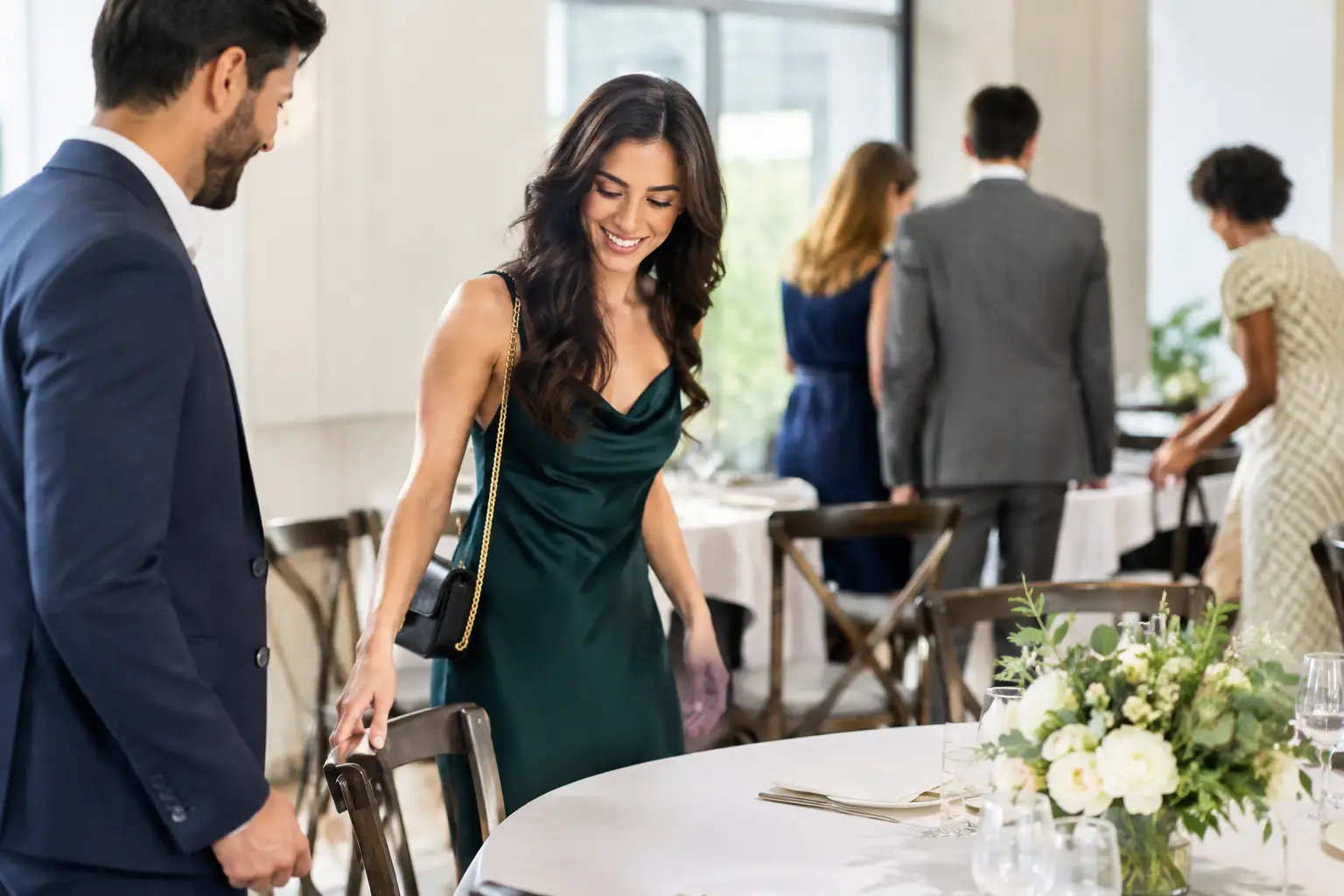
For weddings, gala dinners and corporate events, the answer should be yes. Finding a seat is a small moment, but it sets the tone for everything that follows. A clear, considerate seating-finding process gets people settled quickly, protects the schedule and lets your hosts focus on welcoming guests rather than directing traffic.
Can guests find seats quickly at a large event?
They can, provided the seating plan is designed for the arrival experience, not just for printing. A beautifully arranged floor plan behind the scenes is only half the job. Guests need a fast way to connect their name to a table, then connect that table to a physical location in the room.
At a dinner for 40 people, an alphabetical printed list near the entrance may be all that is needed. At 200 guests, a gala with sponsored tables, or an awards evening where arrivals come in waves, that same approach can create congestion. The right setup depends on guest numbers, venue layout, arrival timing and how familiar attendees are with one another.
The goal is simple: a guest should know where to go within seconds, without feeling as though they have made a mistake or delayed the line behind them.
Start with names people will recognise
Most seating confusion begins before anyone enters the room. Guest lists often contain formal names, nicknames, partners, assistants, company contacts and family members who share a surname. If the displayed name does not match the name a guest expects, a perfectly accurate seating plan can still be difficult to use.
Use the name each person is most likely to search for or spot in an alphabetical list. For a corporate dinner, that may mean including both a guest's name and organisation. For a wedding, it may mean using the familiar first name rather than a formal version used on the invitation. Couples should be listed in a way that makes sense for how they will arrive and search.
This is also where clean guest data matters. Check spelling, duplicate records and surname changes before exporting signs or publishing a digital lookup. A last-minute table move is manageable. A guest who cannot find their own name is far more disruptive.
Keep table names easy to identify
Creative table names can add personality, but they need to work in the room. If tables are named after Australian beaches, wines or places meaningful to the couple, make sure every table sign is easy to read from a distance. Avoid names that are visually similar or hard to pronounce in a busy venue.
Numbered tables remain the quickest option for many professional events. They are particularly useful where venue staff are helping guests, because instructions are immediate: table 14 is on the right side of the ballroom, near the stage. If you choose names, pair them with numbers where practical.
Give guests more than one way to find their table
A strong seating experience has a primary method and a backup. Printed signage is dependable because it does not rely on battery life, mobile reception or a guest being comfortable with technology. Digital search adds speed and flexibility, especially for larger events or late seating changes.
A practical setup often includes an alphabetical display at the entrance, visible table markers in the room and a digital option guests can access from a QR code on their invitation or event signage. The QR code should be large enough to scan easily and placed somewhere guests can pause without blocking others.
A day-of event website can let a guest search their name and see their assigned table on their mobile. This is useful when printed lists would otherwise become several pages long, or when arrivals are spread across a large venue. It also gives hosts a place to share event details and collect guest photos during the celebration.
Digital lookup should support signage, not replace it automatically. Some guests will prefer not to use their phone. Others may arrive with a flat battery, limited data or accessibility needs. A visible printed option and an informed welcome team make the experience inclusive.
Want to turn this guide into a real seating chart in minutes?
Vesavo handles messy guest lists and builds smart table arrangements automatically. Free for up to 50 guests.
Design signage for a crowded entrance
Seating signs are often judged from a laptop screen, then viewed for the first time in a dim foyer with people standing in front of them. Design for the second situation.
Use a type size that remains readable at a sensible distance, strong contrast between text and background, and enough spacing that names do not blur into one another. Sort names alphabetically by surname unless your audience is more likely to search by first name. For informal celebrations, first-name sorting can be more natural. For a formal corporate dinner, surnames usually reduce ambiguity.
Think about placement as carefully as design. A single sign positioned directly inside a doorway can create a bottleneck. Two matching signs on either side of the entrance let guests spread out. For very large events, consider separate alphabetical ranges, clearly labelled so guests do not have to inspect every board.
Place a full floor plan where it helps guests orient themselves, rather than assuming it will be their first point of reference. Once someone knows they are at table 18, a simple map can show whether they should head left, right or towards the back of the room.
Make changes without creating a new problem
Late changes are normal. An RSVP changes, a VIP brings an approved guest, a dietary requirement means a seat needs to move, or a sponsor asks to adjust a table. The risk is not the change itself. The risk is updating one version of the seating plan while a different version is already with the venue, printer or registration team.
Maintain one source of truth. When the plan changes, update the guest assignment, the alphabetical lookup, table plan and place cards together. Before doors open, give the venue team a final version and confirm which version is on display.
This is where a dedicated seating platform saves more than time. Vesavo lets planners import guest lists in CSV or Excel formats, account for relationships, VIPs, preferences and organisational structure, then update seating outputs from the same plan. Its Canva integration also means polished charts and printed assets can be produced without manually copying QR codes between separate tools.
For an event with strict protocol, such as a donor dinner or executive function, build in a final review with the person responsible for guest hierarchy. For weddings and milestone celebrations, ask the host to check family groupings and sensitive relationships before anything goes to print. Automation can speed up assignments, but human approval is still the right final safeguard.
Tip: Vesavo can do this for you automatically — just upload your list and let the AI handle groupings, plus-ones, and table balance.
Train the people guests will ask
Even the clearest system benefits from a calm human fallback. Registration staff, venue coordinators and ushers should know where the latest seating plan lives, how tables are arranged and who can approve a change on the night.
They do not need to memorise every guest. They need a quick way to help without guessing. Give them access to the digital guest search, a current printed list, or both. Brief them on VIP tables, accessible seating and any guests who need extra discretion.
Avoid making on-the-spot seat swaps unless there is a genuine issue. A well-meaning move can affect dietary service, table capacity, sponsor placement or a carefully planned family arrangement. If a change is necessary, have one authorised person make it and ensure the relevant staff are told.
Treat seat-finding as part of hospitality
Guests rarely remember the mechanics of finding their table when it works well. They remember that they arrived, were welcomed, and felt expected. That is exactly the point.
A clear name, a visible table, a quick mobile search and a helpful person nearby turn a potentially awkward first five minutes into a confident start. Every seat, perfectly placed, begins with making it easy for every guest to find it.