
A corporate gala seating example is most useful when it shows the decisions behind the floor plan, not just where each name lands. At a donor dinner, awards night or annual celebration, every table sends a signal: who is valued, who should meet, and how easily the room will work once service begins.
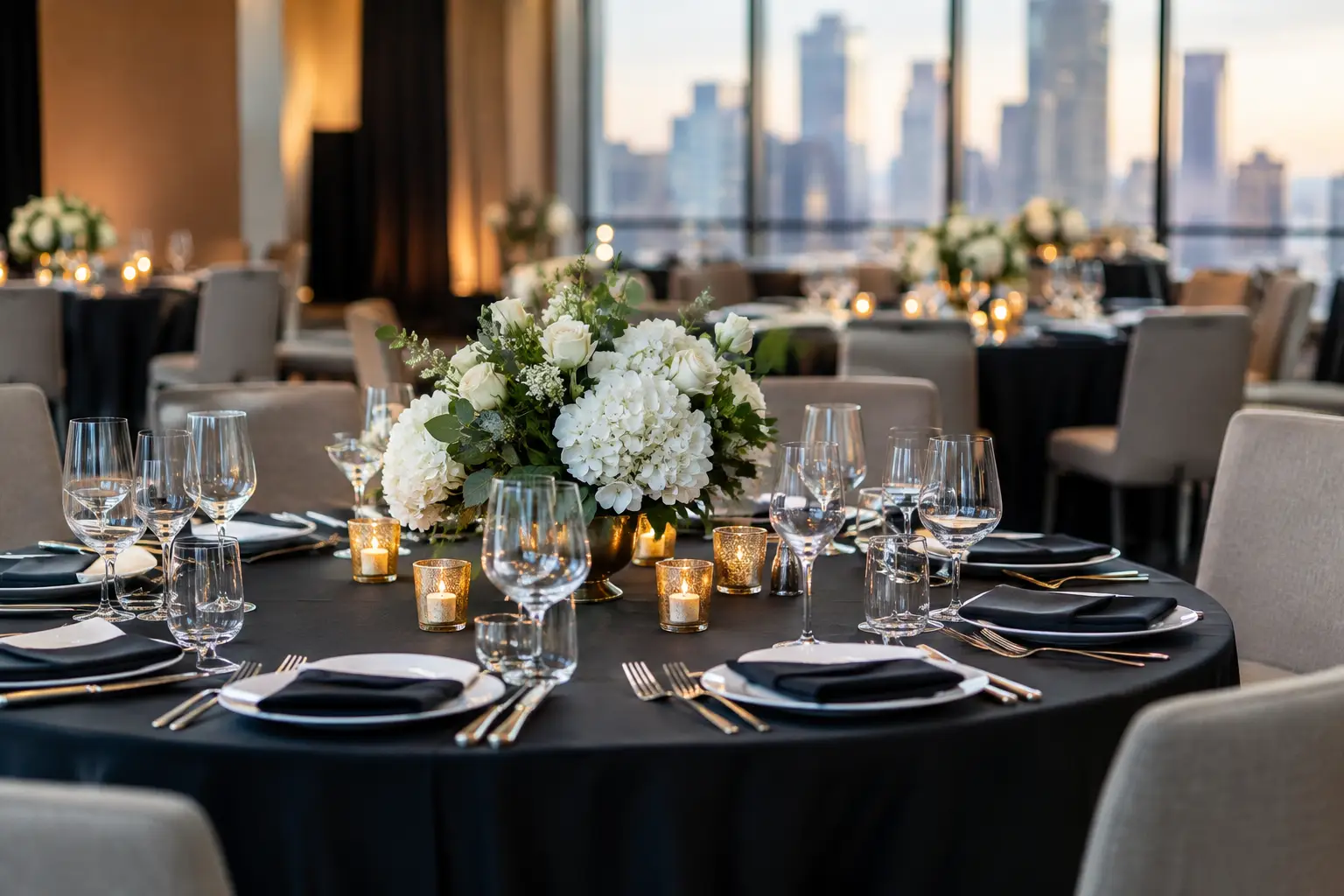
For a 240-person gala, the seating challenge is rarely table capacity alone. You may need to protect sponsor commitments, place executives where they can host well, keep client teams together, manage dietary requirements and avoid seating people with known conflicts side by side. The goal is a room that feels considered to guests and straightforward for the venue team to deliver.
A corporate gala seating example for 240 guests
Imagine a black-tie fundraising gala in Melbourne for a professional association. The event has 24 round tables of 10, a stage at the front of the ballroom, a silent-auction area near the entrance and a sponsor lounge along one side. The guest list includes board members, major donors, corporate sponsors, award finalists, staff, suppliers and media guests.
The event organiser begins by marking six premium tables closest to the stage. These are not automatically the best seats for every important person. Guests seated too close may have reduced sightlines if there is a large lectern, camera platform or entertainment setup. Before assigning anyone, confirm the venue floor plan, stage position and service access.
Tables one to three are reserved for the presenting sponsor and major donors. The chair of the board hosts table one with key supporters and their partners. The chief executive hosts table two with sponsor representatives, while table three brings together prospective major donors who share a genuine connection to the organisation's mission.
Tables four to six are allocated to award finalists, industry leaders and hosted guests. This keeps recognised guests visible without making the front of the room feel like an internal staff function. The remaining tables are organised around teams, client groups and affinity groups, while leaving room for intentional introductions.
This approach gives the room a clear hierarchy without creating an obvious divide between VIP and general seating. That balance matters. A gala should reward the people who make it possible while still giving every guest a polished, welcoming experience.
Start with priorities, not table numbers
Before placing names, create a short set of seating rules. Rank them from non-negotiable to preferred. For this gala, non-negotiables might include sponsor entitlements, accessibility needs, partners seated together and separation requests. Preferred rules could include mixing seniority, placing new donors with experienced ambassadors and keeping colleagues from the same department from filling an entire table.
The distinction prevents minor preferences from overruling genuine requirements. If every request is treated as essential, the plan quickly becomes impossible to manage.
It also helps to nominate a host for each priority table. A strong host is not simply the most senior person in the room. They are someone who can introduce guests, keep conversation moving and make people feel included. A quiet donor may be better seated with an engaged board member than at a table of other quiet donors.
Example table allocations
For the same 240-person gala, the organiser could structure the room as follows:
- Tables 1-3: presenting sponsor, major donors, board chair and executive hosts
- Tables 4-6: award finalists, industry leaders and strategic partners
- Tables 7-12: client and sponsor groups, each with an internal relationship lead
- Tables 13-18: staff, suppliers and professional networks mixed with guest hosts
- Tables 19-22: broader member or community groups with existing connections
- Tables 23-24: flexible seating for late RSVPs, accessibility adjustments and final changes
The final two tables are not an afterthought. Holding a little capacity until the RSVP picture is stable gives the organiser options. It is usually easier to absorb three late confirmations into a flexible section than to rebuild a carefully balanced room two days before the event.
Build each table around conversation
Once priority groups are placed, work table by table. A useful corporate gala seating plan has a reason for each combination. At the chief executive's table, for example, combine a sponsor representative, a long-term supporter, a prospective partner and a board member who can speak confidently about the organisation's next priorities.
Avoid building tables that are too uniform. Ten people from the same company may prefer to sit together at an internal awards dinner, but at a fundraising gala it can limit the networking value of the night. A better arrangement may be six colleagues with four carefully chosen guests, provided the host knows why those introductions matter.
There are exceptions. Some sponsors purchase a full table specifically to entertain clients or reward staff. Honour that agreement first, then consider whether their table should be positioned close to the stage, near the sponsor lounge or alongside related industry contacts. Sponsorship recognition is not only about proximity. It is also about delivering the experience that was promised.
For couples and partners, seat them together unless they request otherwise. For groups, preserve at least one familiar connection at the table, particularly for guests attending alone. A room full of strangers can be productive, but it should not feel like a networking test.
Want to turn this guide into a real seating chart in minutes?
Vesavo handles messy guest lists and builds smart table arrangements automatically. Free for up to 50 guests.
Plan the room, not only the guest list
A seating chart can look tidy on screen and still create operational problems. Keep wheelchair access and clear paths to exits, bathrooms and service stations. Do not place guests with mobility needs at a table that requires staff to move chairs each time someone leaves. Confirm whether the venue numbers seats clockwise, uses a particular table orientation or needs a specific position for the table host.
Consider the programme as well. If award winners must reach the stage quickly, place them near an accessible aisle. If speeches are a central part of the evening, protect sightlines. If the gala includes entertainment, avoid placing key guests directly beside speakers or equipment where conversation becomes difficult.
Dietary requirements need to travel with the seating plan. A venue needs more than a list of gluten-free or vegetarian meals. It needs the guest name, table number and, where relevant, seat position. This reduces the risk of staff asking a guest to identify themselves in front of the table.
Use automation, then apply human judgement
For a guest list of 240 people, manual sorting in a spreadsheet can create avoidable errors. Names are duplicated, teams change, partners are added and last-minute dietary updates arrive after the printed plan has been approved.
A digital seating planner provides a better starting point: import the guest list, set table capacities, label VIPs and groups, record relationships and apply seating preferences. Automated suggestions can then handle the heavy matching work, especially where there are many competing rules.
The organiser still makes the final calls. Automation can identify a workable arrangement, but it cannot always judge whether two stakeholders are ready for an introduction or whether a sensitive business relationship needs space. Use technology to reduce repetitive work, then review high-impact tables with the people who know the guests.
With Vesavo, organisers can import CSV or Excel guest lists, organise guests using the details that matter and produce table plans, seating charts and place cards from the same event data. The Canva integration is particularly useful when the final visual needs to match an invitation suite or gala branding without copying details between separate tools.
Tip: Vesavo can do this for you automatically — just upload your list and let the AI handle groupings, plus-ones, and table balance.
Make the plan usable on the night
A polished seating chart is only valuable if guests and staff can use it quickly. Create one version for the entrance, one for the venue captain and one for the event lead. These may contain the same seating data, but each has a different job.
At the entrance, guests need a clear alphabetical display with their table number in large type. The venue team needs meal and accessibility information in a practical format. The event lead needs an editable live version for last-minute changes, plus a record of who has arrived and who has not.
If you are using place cards, check spelling and titles against the latest guest list. For corporate events, this small detail carries more weight than many planners expect. Confirm post-nominals, preferred names and organisation names, especially for sponsors, elected officials and award presenters.
Print only after a final RSVP cut-off, but expect changes anyway. Keep a small number of blank place cards, a marker and the current table plan at registration. A prepared adjustment is much less disruptive than an improvised one.
The best gala seating plan is not the one with the cleverest table labels or the most complicated networking logic. It is the one that lets every guest find their place, gives hosts a reason to start a conversation and lets your team run the room with confidence - without the spreadsheet chaos.