
A single seating choice can completely alter the tone of your reception. If you are asking yourself how to seat divorced parents at a wedding, you aren't just writing down names for place cards; you are navigating past relationships, complex emotions, and a guest list made up of individuals with a shared past.
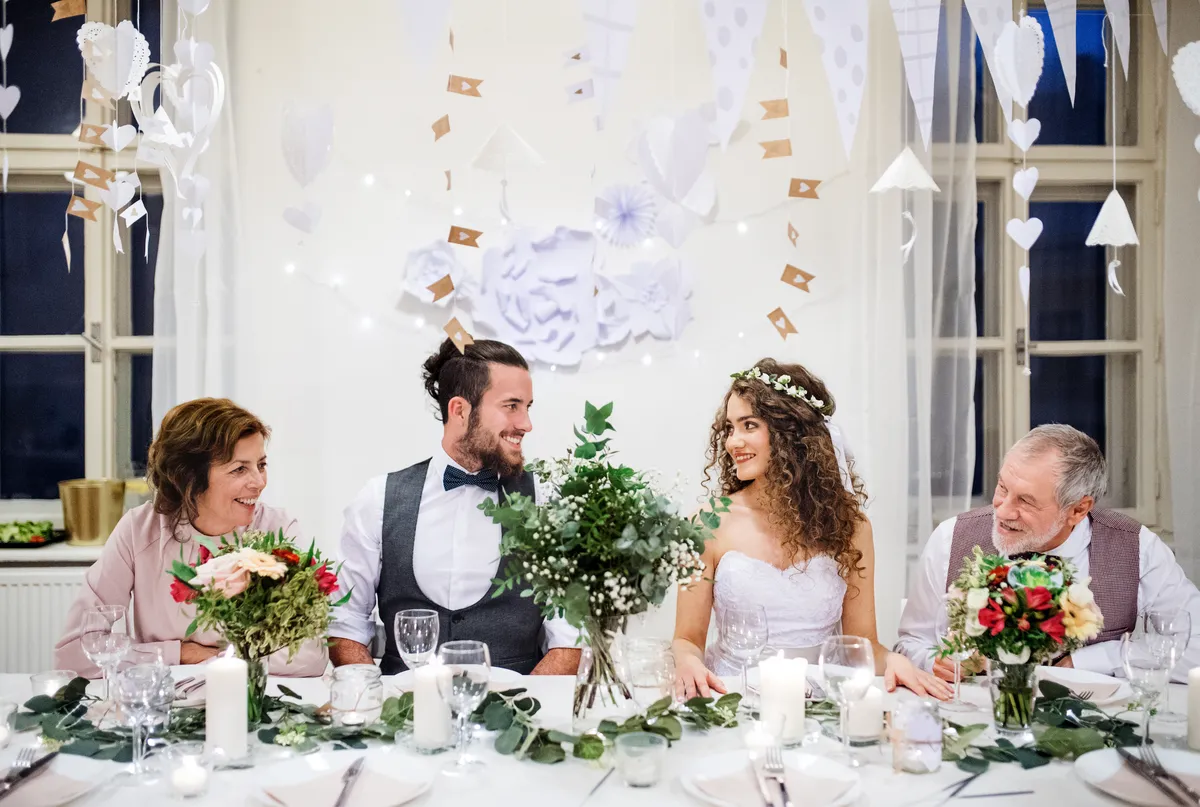
This is why the importance of an explicit strategy can't be overstated. The right seating chart has the power to diffuse tension before it arises, make sure each parent feels included and acknowledged, and ultimately help the night flow more smoothly as it progresses into speeches, formal photographs and other family time.
Prioritize family dynamics, not etiquette books
Conventional etiquette guidelines are helpful only insofar as the current family is relatively stable. In reality, some parents get on well, others only share cordial small talk, others are still openly hostile to each other and some are in their second, or third, marriage now. This all means there is no one-size-fits-all "right" way to handle it.
It is better to start by mapping the relationships. You should ask these questions up front: Are they both willing to be at the same table? Are there any step parents or current partners who will be included in the day? Will it look like one parent is being sidelined if the other sits directly next to the happy couple? These are the questions you should focus on. The ultimate goal for most couples isn't a 'perfect family table'. It's a seating chart that feels equitable and unproblematic. So if this involves separating two people who are keen to maintain as much distance as possible then that's great, it doesn't have to be about politeness and tradition.
The answer to the question of how to seat divorced parents at weddings
The short answer is to seat each divorced parent where they will be most comfortable and where that arrangement best fits the flow of the day.
In the rare cases where parents are on great terms, it works to seat them at the same table, especially for more intimate weddings where everyone knows each other very well. It will be most seamless when everyone has moved on, they have a low-key relationship and there are few or no visible signs of conflict between them. In which case you can still leave a little space between them, as sitting next to one another will feel artificial. You could seat them across the table or maybe with one of the closest family between them. It depends what works best for you.
For more strained relationships it is better to seat divorced parents at separate tables. That way, each parent can relax and enjoy the day rather than being hyper-aware of the other's presence or listening to what they're saying. And it will spare guests who are seated with them the awkward situation of being caught in the middle of things.
And what about if one or both of them have found love again and have a new partner to bring along to the day? This question becomes slightly more layered. It is usually kinder to seat each of them at a table with their current partner and a selection of a couple of close friends or family members. That way neither will feel like a third wheel and each table will settle into an easy, familiar group.
What about the top table?
The top table is where all the pressure can mount. Unless it's a traditional top table, including the wedding party as well as both sets of parents, you don't necessarily have to have divorced parents seated together up on the top table at the front of the room.
Some couples skip the top table altogether and opt for a sweetheart table or a wedding party table instead. It can be the easiest option where family dynamics have become more complicated. This removes the pressure of having divorced parents be 'united' on the dance floor or in front of everyone, and allows you to find a seat for them.
Alternatively, if you want parents in a prime spot for the ceremony, you could have two family tables where each has the same opportunity to see and be seen by the couple. This way you're still giving them a position of importance, without them sitting uncomfortably close to each other. You just need to find a middle ground. If one parent is at the table closest to the couple and the other is tucked at the back of the room, that's obviously going to cause some issues.
Fair doesn't always mean equal
This is the mistake most couples make, which is trying to make every decision the same when the parents have very different relationships with them. Fair seating is not about symmetry; one parent may want to be at a small table with some siblings and old friends, while the other is more happy and comfortable with a group who is sitting near the dance floor. It's better to give each one what they like instead of treating each table exactly the same.
However, being seated at a specific table does still have meaning. Parents will expect to be treated as important guests, so if one parent has an excellent table near the bride and groom's own family table, then you should ensure the other parent has an important one that is a comfortable place for them too. You can control who is sitting with them without appearing to be favouring anyone.
Want to turn this guide into a real seating chart in minutes?
Vesavo handles messy guest lists and builds smart table arrangements automatically. Free for up to 50 guests.
What about step-parents and new partners?
If step-parents, long-term partners and newlyweds come in to mix, it may be even more tricky to sort out, particularly if family loyalties have shifted.
As mentioned previously, what you do depends on the relationship of the people involved and the emotions attached, particularly if a parent has been with their new partner for years and they're a part of daily life, it could be rude to exclude them from a table near the family. Then again, if a split or separation was recent and things are still tense, a new partner being placed at the head table might upset things more.
Again, the best approach is to think about groups of people who are more comfortable together, such as one parent, a partner, a grandparent and a sibling all seated at one table, while the other parent and their partner sit with another set of relatives. You're simply making a group of friends that are more used to being together rather than making a huge statement.
The right people first!
If you're still asking yourself how to seat divorced parents at weddings, it's the conversation around the seating arrangement that matters most.
You don't need to poll everyone about every seat, but you do need to find out some details. Most couples know their family well enough to make a decision, others may be warned by one of the parents that they should never sit at the same table. So you need to find out which one is true.
Keep the conversation light and to the point. The point isn't to make someone feel uncomfortable, it's about their comfort and enjoyment. If someone starts to use the seating plan as a way to settle old grudges, don't allow this, be clear about the boundaries you're placing on the arrangement and keep others away from tension. It is also useful to communicate final decisions with confidence and calm. People are prone to try and change arrangements where there is any hint of hesitation. An explanation that is calm and clear will close discussions much more quickly and easily than an apologetic one.
Create a bit of a buffer
Good seating is not just about table allocation, however. You also need to think about the physical space the tables are situated in.
Where divorced parents are kept separate, it is best not to have them sit at neighbouring tables. Ideally neither should be on the main path towards the rest rooms, the bar or the dance floor, or in fact, both. A small space will make for an overall smoother evening. Similarly, think about the vantage point during the toasts. If the tension between a pair will mean they spend the entire night staring at each other, the situation will not necessarily feel resolved by seating them at different tables.
Having a digital planner in these cases is really helpful. It will allow you to see how guests are distributed in the room and test out a couple of scenarios and move entire guest clusters when you don't want to reconstruct your entire seating plan from scratch. With complex and multiple parent wedding parties, this ability to quickly adjust your guests' seating is the only real way to make the right decision. Otherwise your seating chart may look perfect on the page but it won't work in practice.
When to deviate from tradition
There are some families who can follow traditional, etiquette-led wedding seating arrangements. There are other families where a more modern approach is more realistic, and that is perfectly fine.
If parents are friendly throughout the wedding ceremony but not a dinner party, seat them differently at the reception. If one parent is hosting or paying for the wedding, it is only natural this might impact how they view the seating arrangements, but don't let these expectations override what is best for the wedding day. In cases of high conflict, you should forget about tradition as your first step, and protect the couple from further hurt.
There may also be cases where different family groupings make more sense. This avoids the awkwardness and stigma of the so-called "immediate family" table and is less loaded, especially in blended families where the parties simply won't have much in common. A wedding is emotional enough without you needing to try and impose a nice, pretty seating plan on a reality that isn't pretty.
Tip: Vesavo can do this for you automatically — just upload your list and let the AI handle groupings, plus-ones, and table balance.
A strategy for deciding the final arrangements
There will also be cases where you can just ask yourself a few questions to help you decide on the final seating plan. You just need to ensure that you have a plan that is respectful and stable, and has a low-risk factor.
The respectful part means that you have respected each parent's role. The stability bit means that the people in the table will settle down. Low-risk means that one awkward conversation does not ruin your reception mood.
If you have a plan that looks great but the whole evening relies on all the parties keeping it together, it is probably too fragile. Choose the seating plan with the lowest risk of tension, even if it does mean that you cannot adhere to tradition.
For wedding planners and couples managing these complex choices, a tool like Vesavo can make it much simpler to visualise. Being able to create family groupings, test different table options and move people around without the spreadsheet is really helpful for managing how one single choice can affect 1 or 5 different guests.
A wedding seating chart doesn't need to sort out family history. All it needs to do is to make your wedding day calm, well-arranged and kind enough for people to focus on why you're there!