
A seating plan can look deceptively simple on a floor plan. Behind every table are family dynamics, dietary requirements, VIP expectations, team hierarchies and guests who should probably not share a bottle of wine. Seating algorithms versus manual planning is not a question of replacing human judgement. It is about deciding where software can remove the spreadsheet chaos, so you can focus on the calls that need a person.
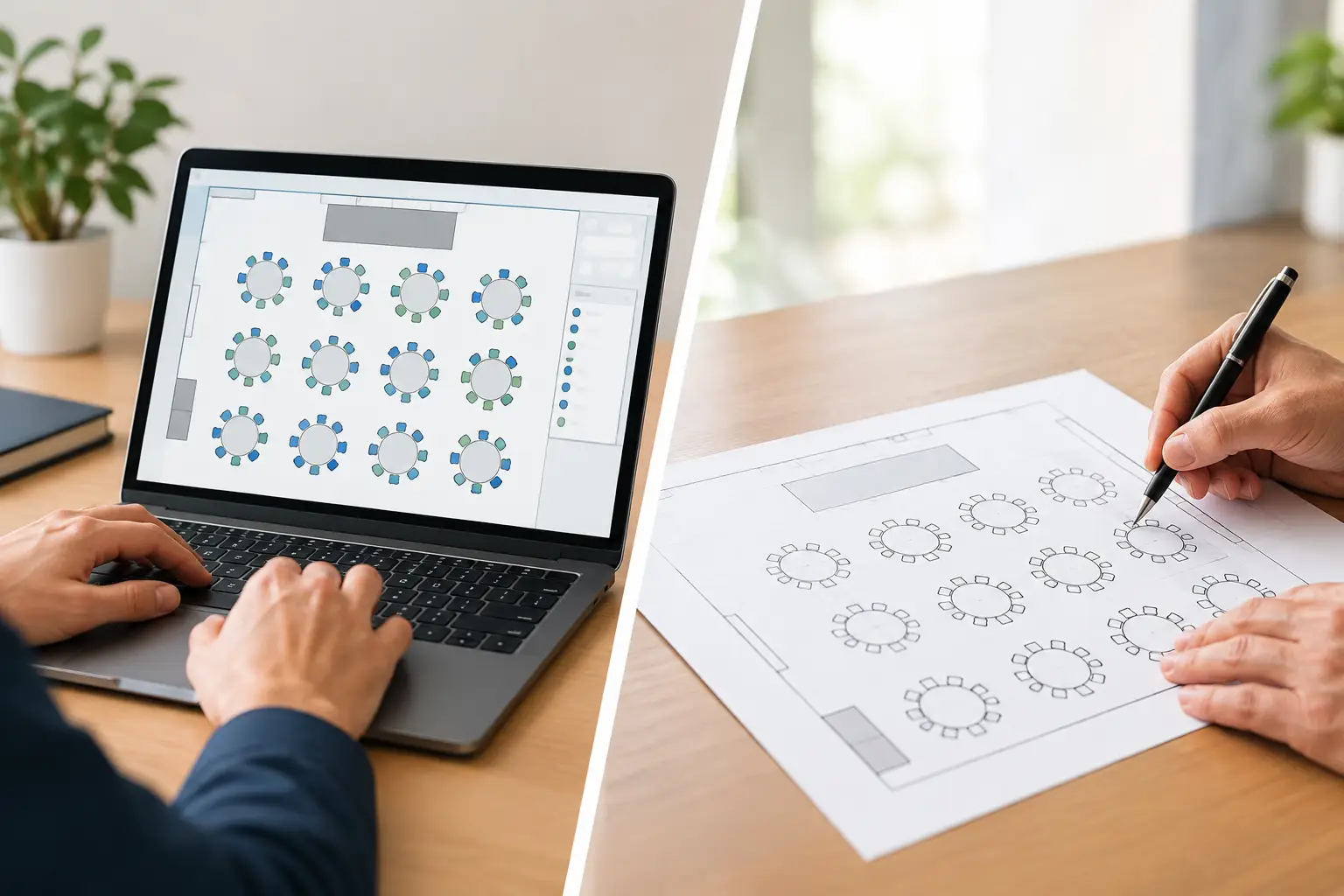
For a 30-person birthday dinner, moving names around by hand may be perfectly reasonable. For a 250-guest wedding, fundraising gala or corporate awards night, the same method can become slow, fragile and difficult to check. The right approach depends on the event, the information available and how often the guest list is changing.
Seating algorithms versus manual planning: the real difference
Manual seating planning relies on a planner or host to review guest details, make decisions and place each person at a table. It can happen in a spreadsheet, on printed name cards, with sticky notes or inside a visual floor-plan tool. The advantage is direct control. An experienced planner may immediately know that two cousins need to be separated, that a major donor belongs near the stage, or that a new staff member will feel more comfortable with their team.
The downside is that every adjustment creates more work. If a guest declines, a table changes capacity or a sponsor brings an additional colleague, someone must recheck the affected tables. It is easy to overlook one-person tables, split couples, uneven table counts or a guest who has been moved away from their dietary requirement notes.
A seating algorithm works from structured information and rules. It can consider table capacities, groups, relationships, preferences, departments, VIP status and other criteria, then suggest or assign placements at scale. Rather than beginning with a blank plan and hundreds of names, the planner begins with a workable first version.
That distinction matters. Good automation does not claim to understand every social nuance. It gives you a faster starting point, surfaces conflicts earlier and handles repetitive balancing work consistently. The organiser remains responsible for the final guest experience.
Where manual planning still earns its place
Manual planning is not outdated. It is often the better choice when the guest count is low and the host has detailed personal knowledge that has not been captured in a guest list. A small dinner party, for example, may be shaped by conversation flow, personalities and one-off considerations that would take longer to enter as rules than to arrange by hand.
It is also useful at the end of a complex planning process. Once automated suggestions have created a strong foundation, a planner may make a handful of intentional changes: placing grandparents closer to an exit, moving a nervous speaker near supportive colleagues, or ensuring a client is seated with the right account lead.
The problem is not manual judgement. The problem is using manual work for tasks software can calculate more reliably. Asking a planner to count each table repeatedly, reconcile multiple spreadsheet versions and rebuild a chart after every RSVP update is not a high-value use of their time.
What seating algorithms do well
Algorithms are strongest when the event has scale, constraints or frequent change. They are particularly useful for weddings with large family groups, gala dinners with sponsor and donor tables, and corporate functions where departments, seniority or client relationships matter.
Want to turn this guide into a real seating chart in minutes?
Vesavo handles messy guest lists and builds smart table arrangements automatically. Free for up to 50 guests.
They turn guest data into usable rules
An algorithm can only work with the details it is given. This is why a well-structured guest list is more than admin. Guest names, plus-ones, group memberships, accessibility needs, dietary requirements, table preferences and relationship notes give the system a useful basis for planning.
For corporate events, that may mean keeping teams together while distributing leaders across tables. For a wedding, it may mean keeping households close, placing parents where they have a clear view of speeches, and separating guests where necessary. For a gala, it may mean reserving premium positions for sponsors and ensuring hosts are spread across the room.
The practical benefit is consistency. When the rules are recorded, they do not disappear because someone is working from an old tab or trying to remember a conversation from three weeks ago.
They make capacity balancing less painful
Table capacity is one of the most common sources of late-stage seating trouble. A table that appears to have eight guests may have nine after a plus-one is confirmed. Another may fall below the intended number after two cancellations. Balancing those changes manually can set off a chain reaction across the room.
Algorithms can account for capacities as assignments are made, helping avoid obvious overfills and underfills before the seating chart reaches the venue. This is valuable when layouts include mixed table sizes, VIP tables or spaces reserved for mobility access.
They give teams a quicker route to a polished plan
A floor plan is not just an internal working document. Caterers, venue teams, hosts and guests need clear outputs. Once placements are organised, the information still needs to become a readable table plan, place cards and service-ready lists.
A connected platform reduces the risk of retyping names from one tool into another. With Vesavo, planners can import guest lists in CSV or Excel formats, apply seating logic, refine the result and prepare polished seating materials, including designs through its Canva integration. That is different from using a static template that requires names or QR codes to be copied and pasted again whenever details change.
The trade-offs to consider before automating
Automation works best when you set it up thoughtfully. If your guest data is incomplete, the first suggested plan will reflect those gaps. A system cannot know that two people had a disagreement last Christmas unless that instruction has been recorded.
There is also a judgement question. An algorithm may identify an efficient arrangement based on stated rules, but efficiency is not always the same as hospitality. A planner should review the plan for social comfort, visibility, access and the atmosphere the event is meant to create.
For this reason, avoid treating automated seating as a button you press once. Treat it as a planning partner. Set the criteria, review the result, make the high-context adjustments and rerun or rebalance as RSVPs change.
Tip: Vesavo can do this for you automatically — just upload your list and let the AI handle groupings, plus-ones, and table balance.
A practical workflow for better seating decisions
Start by cleaning the guest list before you touch the floor plan. Confirm names, plus-ones, RSVP status and dietary requirements. Then identify the information that actually affects seating: groups that should stay together, guests who should be separated, VIPs, hosts, accessibility requirements and preferred table locations.
Next, define the room accurately. Enter table shapes, capacities and any fixed positions, such as the head table, stage-facing tables or sponsor tables. This step is essential because even clever seating logic cannot solve an inaccurate layout.
Use automation to create a first pass, then review it table by table. Look beyond the numbers. Are conversation groups sensible? Are guests with access needs placed practically? Have you created an isolated table because of an old preference that no longer applies? This is the point to make deliberate human decisions.
Finally, keep a single source of truth. When the final RSVP comes in or a table is moved by the venue, update the plan where the guest information and seating chart live together. That makes it far easier to regenerate place cards, share instructions with the venue and provide guests with a clear way to find their table on the day.
Choose the method that protects the guest experience
Manual planning offers intimacy and control. Seating algorithms offer speed, structure and a far better way to manage complexity. Most successful events use both: automation for the heavy lifting, and human judgement for the details that make guests feel expected rather than simply assigned.
Every seat carries a small message about who belongs together, who is being honoured and how smoothly the room will feel. Give the repetitive work to the system, keep the meaningful decisions with the people who know the event best, and you can place every guest with greater confidence.