
The head table is where every toast, first course and candid photo seems to land. That makes it one of the most visible seating decisions of the day - and one that can create unnecessary pressure when family dynamics, wedding party expectations and room layout all compete. This wedding head table guide gives you a practical way to choose a setup that feels natural, looks polished and works for the people actually sitting there.
Start with the purpose of your head table
A head table does not have to follow tradition for tradition’s sake. Its job is to give the reception a clear focal point, make speeches easy to deliver and let the couple feel connected to the people they most want beside them.
For some couples, that means a long table facing the room with the wedding party. For others, it is an intimate sweetheart table for two, with close family and friends seated nearby. Neither option is more meaningful. The right choice depends on the size of your wedding, the atmosphere you want and how much attention you are comfortable receiving while you eat.
Before assigning a single seat, decide what you want the table to do. Do you want to be surrounded by your closest friends? Would you rather have quiet time together between formal moments? Are parents expected to be at the front, or would they prefer to host their own family tables? A clear answer prevents you from trying to satisfy every tradition at once.
Choose a head table layout that suits the room
The room should influence the arrangement. A layout that photographs beautifully in a ballroom can feel crowded or disconnected in a restaurant private dining room.
The traditional long head table
This is usually a rectangular table positioned at the front of the room, with the couple centred and the wedding party seated alongside them. It creates a clear visual centre and works well for larger receptions, formal speeches and rooms with a defined front wall.
The trade-off is visibility. Everyone seated at the table will be watched, photographed and often approached throughout dinner. It can also be harder for wedding party members to speak with their partners if those partners are placed elsewhere. If you use this format, consider seating partners at nearby tables rather than across the room.
Want to turn this guide into a real seating chart in minutes?
Vesavo handles messy guest lists and builds smart table arrangements automatically. Free for up to 50 guests.
The sweetheart table
A sweetheart table seats only the couple. It is an elegant option for couples who want a few minutes together during a busy day, and it avoids the delicate question of whether parents, siblings or wedding party members should take the prime seats.
Place it where guests can still see you clearly, ideally with a good view of the speeches and dance floor. The table should feel intentional, not isolated. A simple floral arrangement, candles or a backdrop can distinguish it without making it feel theatrical.
A family table or king’s table
A family table places the couple with parents, siblings and sometimes grandparents. A king’s table is a larger rectangular table that may include both family and the wedding party. These arrangements can feel warm and inclusive, particularly for smaller weddings or families who are genuinely close.
They do, however, require more careful relationship planning. If divorced parents, new partners or strained relatives are involved, a long shared table can make a meal feel much longer than it needs to. Separate but nearby tables may be kinder to everyone.
Who should sit at the head table?
There is no rule that says the wedding party must sit with you. Nor is there a rule that says parents must be included. Choose based on your relationships and the experience you want each person to have.
If you choose a wedding party table, the couple traditionally sits in the middle, with attendants arranged on either side. You can alternate sides by relationship, pair people with their partners, or group friends who already know one another. Symmetry looks neat, but comfort matters more than a perfectly balanced photograph.
For a family table, give priority to the people who have played a central role in your lives. If parents are divorced, avoid treating the seating chart as a public statement about family hierarchy. Give each parent a comfortable place with their partner or key relatives, and make sure neither feels tucked away at the end of a table.
A useful test is simple: would each person be pleased to spend the full meal in that seat? If the answer is uncertain, reconsider the placement. The most successful wedding seating is not about signalling status. It is about creating easy conversation and avoiding avoidable tension.
Plan around speeches, service and sightlines
A beautiful head table can still be impractical. Check the operational details with your venue before locking in the floor plan.
First, make sure the table has a clear view of the room and that guests can see the couple without standing up. Avoid placing it in front of a doorway, beside the service entrance or directly under harsh downlights. Ask where photographers and videographers will stand during speeches, then leave enough space for them to work without blocking guests or staff.
Next, consider access. The couple and speakers should be able to get in and out easily, especially if speeches, outfit changes or cultural traditions require movement during the reception. A tightly packed head table against a wall may look efficient on paper but quickly becomes awkward.
Finally, look at the audio plan. If the room has a lectern, microphone or band, the head table should be positioned so speakers can address both the couple and the room. Guests should not have to turn around for every toast.
Keep partners, children and comfort in the plan
Wedding party members often spend the entire day supporting the couple. Seating them separately from their partners can be fine for a short formal dinner, but it is worth considering the social cost. Partners who know no-one else may feel like an afterthought, while wedding party members may feel torn between the head table and the people they arrived with.
There are several workable approaches. Seat partners together at a nearby table, include them at a larger king’s table, or choose a sweetheart table so everyone else can sit with their own date. The best option depends on your numbers and the closeness of the group.
If children are involved, decide whether they belong at the head table before you design it. Young children may need a parent nearby, room for a high chair or a quick exit route. Older children may be thrilled to sit with the wedding party, but only if the meal and speeches suit their attention span. Practicality is not less special.
Tip: Vesavo can do this for you automatically — just upload your list and let the AI handle groupings, plus-ones, and table balance.
Use your seating plan to test the full reception
A head table should not be planned in isolation. It affects where parents sit, where partners sit, how guests move through the room and which tables receive the best view of key moments.
Start by placing the couple, then add the people who need to be close by: speakers, parents, children and wedding party members. From there, build outward using relationship groups, accessibility needs and conversational fit. Keep guests with mobility requirements away from congested paths, and avoid placing anyone who needs quiet conversation directly beside speakers or the band.
This is where a digital seating planner earns its place. Rather than shifting names between spreadsheets and hand-drawn floor plans, you can test alternative layouts, keep dietary requirements attached to guest records and see the room as a whole. Vesavo can help turn a guest list into an organised table plan, then export polished seating charts and place cards when the arrangement is ready.
Do not wait until the final week to check the plan. Share an early version with your venue or coordinator so they can flag service routes, table-size limits and sightline issues. The closer you get to the day, the more useful it is to make small, deliberate changes rather than rebuild the room.
Make the table feel like part of the celebration
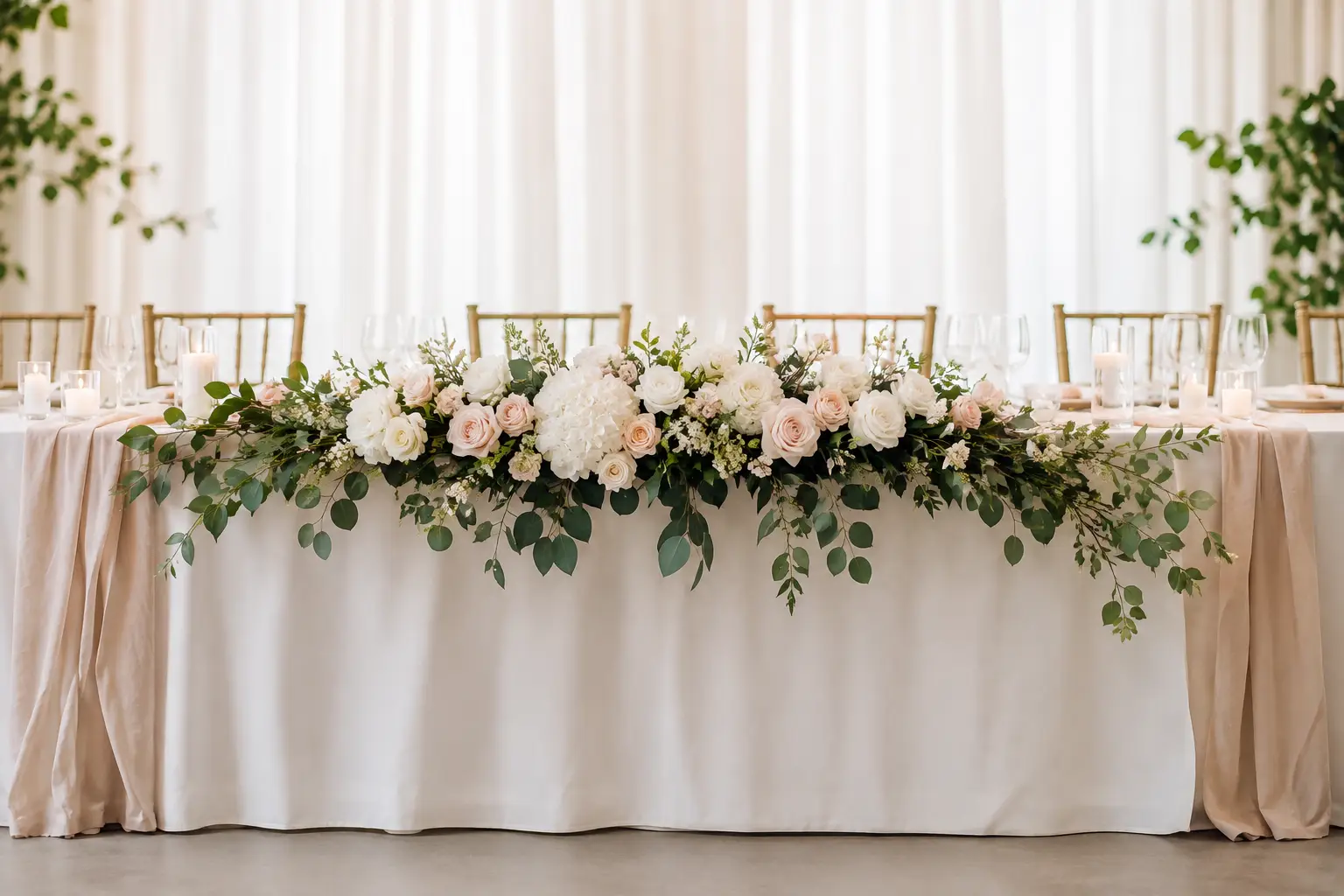
Your head table should be recognisable without becoming a barrier between you and your guests. Coordinate its linen, florals and place settings with the rest of the reception, then add a subtle point of difference such as a fuller arrangement, a low sign or a distinctive chair style.
Keep centrepieces low enough for conversation and photographs. If you are using candles, confirm venue rules and leave room for water, glassware and place cards. The people at this table still need to eat comfortably.
The best head table is not the one that looks most traditional. It is the one that lets the people you love settle in, enjoy the meal and be present for the moments that matter. Plan for comfort first, then let the photographs follow.
Write your opening paragraph here — set the scene and the problem this post solves for the reader.