
A wedding guest list rarely stays still. A cousin brings a partner, a colleague declines, dietary requirements arrive late, and a parent has a strong view about who should not share a table. The most useful AI wedding planning trends are not about replacing the planner or couple. They are about bringing order to this moving set of decisions without the spreadsheet chaos.
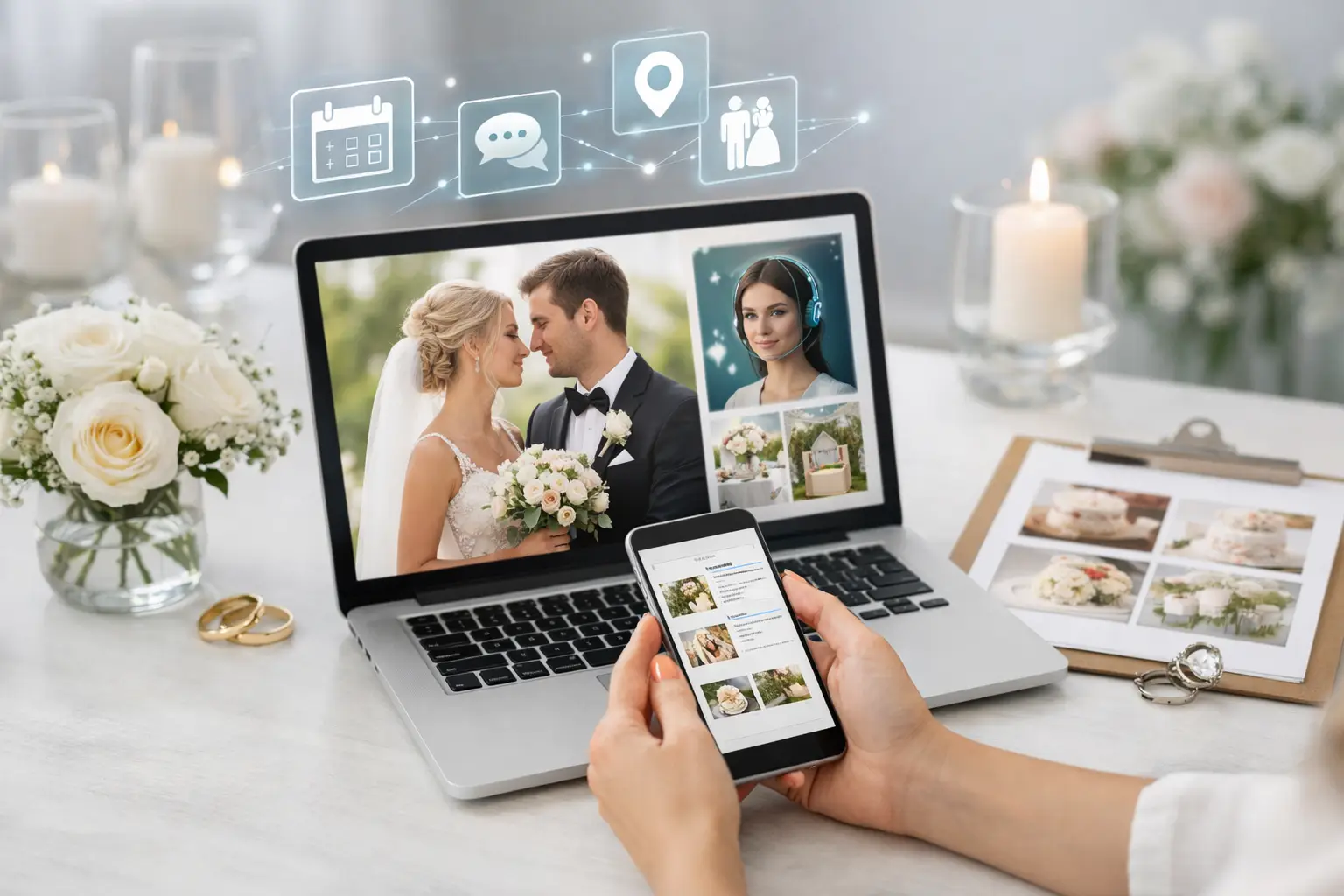
For Australian couples and planners, the appeal is practical. Weddings involve real people, tight timelines, venues with fixed floor plans and decisions that can be difficult to reverse once stationery is printed. AI can reduce the manual work behind those decisions, but only when it is given clear information and used with appropriate human oversight.
AI wedding planning trends are moving towards connected workflows
The early wave of wedding technology focused on single tasks: a digital invitation, an online RSVP form or a template for a seating chart. The stronger trend is connected planning. Rather than copying guest details between separate tools, planners increasingly expect guest responses, table assignments, supplier notes, budgets and timelines to work from the same source of truth.
That matters because guest management is not a standalone job. An RSVP changes the catering count. A dietary requirement needs to reach the venue. A table adjustment can affect place cards, the printed seating plan and the person greeting guests at the door. When systems are connected, one update can flow through the relevant outputs instead of creating another round of checking.
This does not mean every wedding needs an enormous planning system. A 40-person lunch has different needs from a 350-guest celebration with formal speeches, vendors and multiple room layouts. The best platforms let organisers enable only the tools that support the event, so the workspace stays clear rather than becoming another thing to manage.
Seating intelligence is becoming more useful, not more impersonal
Seating is one of the clearest applications for AI because it combines repetitive admin with judgement calls. A good seating engine can process guest groups, table capacities, relationship preferences, VIP placement and accessibility needs far faster than a planner can move names around manually.
The value is not that an algorithm makes every social decision. It cannot fully understand a family dynamic from a spreadsheet, nor should it pretend to. Its job is to produce a workable starting point, identify conflicts and preserve the rules the couple or planner has set. The human organiser remains responsible for the sensitive details: keeping recently separated relatives apart, placing a nervous guest near familiar faces or giving grandparents an easy route to the exit.
The practical workflow is straightforward. Import the guest list in the format already being used, record the relevant relationships and preferences, set table sizes and room constraints, then generate an initial plan. From there, review the suggestions, make intentional changes and export the final chart and place cards. A tool such as Vesavo is designed around this process, including flexible CSV and Excel imports and AI-assisted seating logic for complex groups.
Better data makes better seating suggestions
AI is only as helpful as the information behind it. A guest list with names and RSVP status can support basic assignments. A guest list that also includes households, age groups, dietary requirements, accessibility notes, wedding party roles and relationship preferences supports much better ones.
Planners should avoid overloading the system with vague or overly personal notes. Record what affects the event outcome. For example, “needs wheelchair access”, “should sit with university friends” or “not at the same table as X” is actionable. A long account of family history is usually not.
It is also worth deciding which rules are firm and which are preferences. “Grandparents must be close to the dance floor exit” may be non-negotiable. “Friends from work would ideally sit together” may be flexible. This distinction gives the planner a sensible way to assess suggested layouts when the room simply cannot satisfy every request.
RSVP collection is becoming a planning signal
Online RSVPs are no longer just a yes-or-no headcount tool. They can capture attendance, plus-ones, meal choices, dietary needs and practical guest information early enough to guide decisions across the event.
The current shift is towards using these responses as live planning signals. If a guest changes from attending to declining, the seating plan, catering numbers and table balance can all be reviewed immediately. If several guests request vegetarian meals at one table, that information can be passed on in a format the venue can use.
A wedding website and QR code can make response collection easier, particularly where invitations are printed. But the QR code should be part of a proper guest workflow, not a disconnected add-on. Guests should be able to respond clearly, and organisers should be able to act on the information without copying it into several documents.
Visual outputs are expected to stay editable
Couples want a seating plan that looks considered, not like a last-minute office document. At the same time, the final version often changes close to the event. This is why editable, export-ready outputs are becoming more valuable than static templates alone.
Templates can be a useful design starting point, especially for a simple event. Their limitation appears when every update requires manual copy and paste, rechecking names and recreating QR codes or table allocations. A connected integration with a design tool allows the visual result to remain polished while the operational data is managed properly.
The right approach depends on who owns the design. A wedding stylist may need full creative control over typography and layout. A venue coordinator may need a clear, accurate floor plan more than decorative details. The couple may simply want place cards and a seating chart that match their stationery. Planning technology should support each of those outcomes without forcing the same workflow on everyone.
Day-of information is shifting to mobile-first access
Printed signs will remain part of many weddings, particularly formal receptions. Yet a growing number of events also give guests a mobile-friendly way to find their table, check timings or share photos from the day.
This can reduce pressure on the welcome team and help when guests arrive in waves. It is particularly useful for large receptions, venues with multiple spaces or events where the seating plan changes after printing. The trade-off is that not every guest will want to use a mobile, and reception staff still need a clear backup plan for anyone who prefers to ask in person.
The best day-of tools complement hospitality rather than replacing it. A guest should never feel they have to solve a technology problem before they can enjoy the celebration.
AI will sharpen operations, not replace wedding judgement
There is understandable caution around AI, especially when guest data, family relationships and budgets are involved. Couples and planners should ask how data is stored, who can access the event workspace and whether the platform gives them control over its recommendations. They should also check every final output before it is sent to a supplier or printed.
AI is particularly good at spotting capacity problems, reducing repetitive rearranging and keeping related planning information organised. It is less reliable for decisions that depend on tone, personal history, cultural expectations or the feeling a couple wants to create in the room. Those choices still belong to people.
The most effective planners will use AI to protect their time for the work guests actually notice: a thoughtful welcome, a calm room change, a table where everyone has someone to talk to and fewer last-minute surprises. Every seat can be more confidently placed when the admin is doing less of the heavy lifting.