
Five minutes before reception doors open is a terrible time to realise two cousins share the same first name, one guest has changed tables, and your handwritten cards all lean at different angles. Printable place cards for wedding seating solve a very real problem at exactly the moment precision matters most. They do more than label a seat - they keep guest flow calm, support your seating plan, and make the room feel considered from the first table to the last.
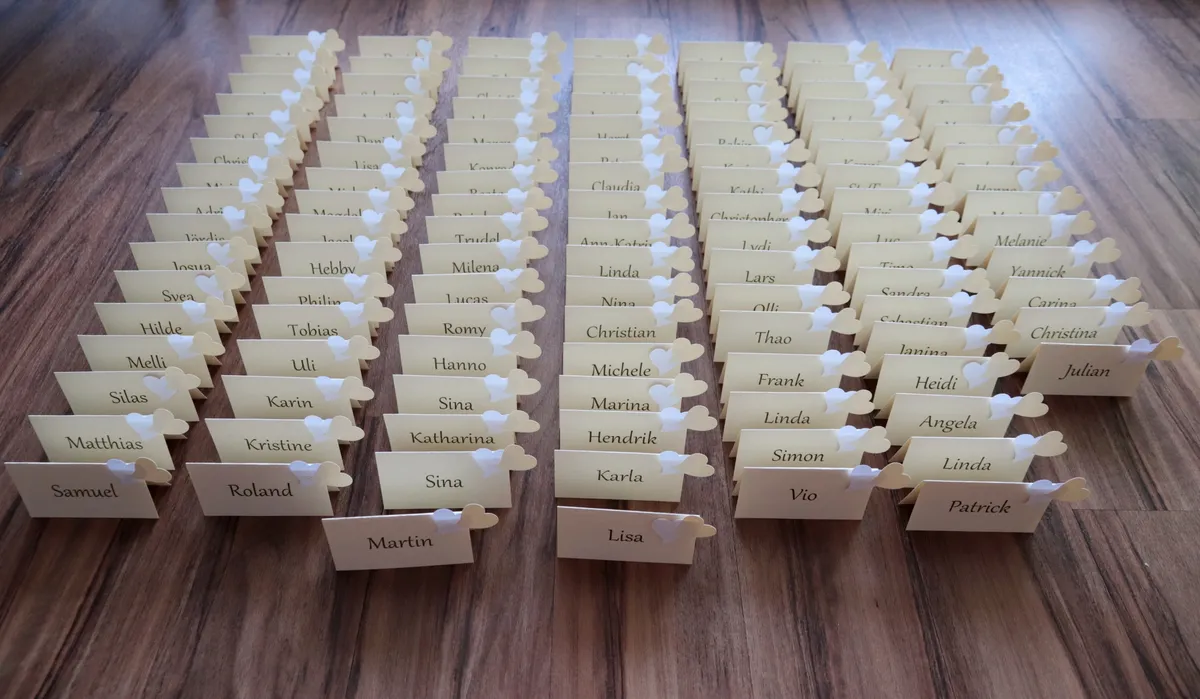
For couples, planners, and venue teams, place cards sit right at the intersection of design and logistics. They need to look polished, but they also need to be accurate, readable, and easy to produce when the guest list shifts late in the process. That is why a printable format often wins. It gives you control over style without trapping you in hours of manual formatting or last-minute handwriting.
Why printable place cards for wedding events work so well
A wedding reception runs on small details that either support the experience or quietly create friction. Place cards are one of those details. When they are clear and consistent, guests find their seats faster, staff answer fewer questions, and the room starts on time. When they are inconsistent or missing, confusion spreads quickly, especially at larger weddings or mixed family tables.
Printable place cards for wedding setups are practical because they scale. A 40-person lunch and a 250-guest ballroom reception both need the same thing - accurate names in the right place. Printing gives you uniform spacing, legible fonts, and a straightforward way to update the full set if one table changes. It also makes coordination easier with venues, stylists, and on-the-day staff who need final materials they can trust.
There is also a presentation advantage. Even simple folded cards, when printed cleanly on quality stock, signal that the event has been carefully organised. That matters at weddings where every visual element is part of the overall impression.
The real job of a wedding place card
It is easy to think of place cards as decor first and logistics second, but the order should usually be reversed. Their main job is to connect the guest list to the seating plan without room for guesswork. That means the name must be correct, the table assignment must be final, and the formatting must be readable in venue lighting.
This is where many DIY setups run into trouble. A design can look lovely on a laptop, then print too small, too pale, or too crowded once folded. Long surnames, titles, and plus-ones expose weak templates quickly. If you are handling a complex seating arrangement with divorced parents, blended families, friend groups, or VIP placements, your place cards are only as reliable as the data behind them.
That is why the strongest workflow starts with the seating plan, not the stationery file. Once seating is settled, place cards become an export task rather than a separate manual project. It is faster, cleaner, and far less risky.
How to create printable place cards for wedding seating
Start with a guest list that is structured properly. You need consistent name fields, confirmed RSVPs, and one clear version of the truth. If guests are listed differently across spreadsheets, email notes, and vendor documents, errors creep in fast. Clean data sounds unglamorous, but it is what makes polished printouts possible.
Next, finalise table assignments before worrying about fonts and paper stock. This is where many hosts lose time. They tweak card design while the seating plan is still moving, then have to redo everything. A better approach is to lock the placement logic first, especially for family dynamics, accessibility needs, dietary groupings, and guests who know each other.
Once seating is confirmed, move to formatting. Choose a font that is elegant but easy to read at a glance. Script can work for names, but only if legibility stays high. In most cases, a clean serif or modern sans serif is safer, particularly for older guests or dimly lit receptions. The card size should suit the table setting and leave enough room for names with longer character counts.
Printing should be treated as part of event operations, not just admin. Test one full sheet before running the entire batch. Check alignment, fold position, ink density, and spacing. Hold the sample at table level, not just under office lighting. What looks crisp on screen can feel faint in a candlelit room.
Finally, build in a buffer. Print a few blank matching cards and a spare set for the most likely last-minute edits. Wedding logistics change late. Having backup stock on hand saves stress.
Design choices that help rather than complicate
The best place card design is rarely the busiest. Clean layouts usually outperform decorative ones because guests only need one thing in the moment - to spot their name quickly. If you are using a floral border, monogram, colour accent, or themed motif, keep it secondary to readability.
Paper matters more than many people expect. Flimsy stock can sag or curl, particularly in humid conditions or outdoor settings. Heavier card stock gives folded cards structure and keeps the table setting looking sharp through the reception. Matte finishes are often easier to read than glossy ones under venue lighting.
Colour should be chosen with contrast in mind. Pale grey text on cream stock may suit a mood board, but it is not ideal in a low-lit function room. Dark text with strong contrast is the safer choice. If your wedding aesthetic leans soft and minimal, you can still achieve that without sacrificing clarity.
There is a trade-off here. Highly customised designs feel personal, but they take more time to proof and print accurately. Simpler templates are faster and easier to reproduce. The right choice depends on your timeline, guest count, and tolerance for manual revision.
Common mistakes with printable place cards for wedding receptions
Most problems come from process, not printing. The first is creating place cards before the seating plan is truly final. If table assignments are still changing, every design decision sits on unstable ground.
The second is treating the guest list casually. Nicknames, inconsistent capitalisation, missing surnames, and unclear plus-one details all show up on the final cards. If your RSVP form says "Sam and guest" but the final attendee is Samantha Lee, you need that corrected before export.
Another common issue is overdesign. Tiny fonts, low contrast, and decorative typefaces might photograph nicely in a flat lay, but they fail in live event conditions. Guests should not need to squint.
Then there is production timing. Leaving printing until the day before creates avoidable pressure. Printers jam, stock runs out, and someone always notices a typo after the first batch. Giving yourself a little room is one of the easiest ways to reduce wedding-week stress.
When automation makes the biggest difference
For small weddings, it is possible to manage place cards manually if the guest list is stable and the seating chart is simple. But once guest numbers rise or relationship dynamics become layered, manual formatting starts to break down. This is especially true when you are balancing family sensitivities, friendship groups, kids' tables, vendor meals, or accessibility requests.
An intelligent seating workflow changes the job entirely. Instead of assigning every seat in a spreadsheet and then rebuilding the same information in a separate document, you work from one structured system. Seat guests, refine tables, and then export polished outputs that match the final plan. Every seat, perfectly placed, without the spreadsheet chaos.
For planners and venue teams, that consistency matters as much as speed. It reduces mismatches between the table chart, escort display, and place cards. It also helps when couples want to review changes late in the process without creating a fresh round of admin.
This is where a platform such as Vesavo fits naturally into the workflow. If you can import a guest list, organise table logic, and export print-ready materials from the same source, the chance of errors drops sharply. That does not just save time. It protects the guest experience.
Choosing the right approach for your wedding
If your wedding is intimate, design-led, and relatively simple to seat, a custom printable template may be enough. If your event is larger, more formal, or includes multiple competing priorities, a structured seating tool is often the smarter path. The tipping point is usually not aesthetics. It is complexity.
Ask a simple question: if three guests cancel, two names change, and one family needs to move tables, how quickly can you update every output with confidence? If the answer is "not very", your workflow needs tightening before you print.
Good place cards do not call attention to themselves. They quietly keep the room moving, support your seating decisions, and help the reception feel calm from the first arrival. When the names are right, the layout is clear, and the print quality holds up, guests barely notice the effort behind them. That is exactly the point.